How to Track Candidates Without an ATS
Small and mid-size companies don't need expensive hiring software to hire well. They need one shared list, clear stages and fast follow-ups.
Start with positions
For each open role, write down:
- Role, department and number of openings
- CTC budget (a range is fine)
- Date opened and hiring manager
- Must-have skills, in three or four lines
The budget matters early: if a strong candidate expects 30% more, decide in days, not weeks.
Use a few clear stages
Applied → Screening → Interview 1 → Interview 2 → Offer → Joined, plus Rejected and Dropped. Every candidate is in exactly one stage at any time.
Give every candidate a next action and date
"Schedule interview by Thursday", "Share offer by Monday". Candidates in active processes elsewhere won't wait. A daily look at overdue follow-ups prevents most drop-offs.
Measure four numbers
1. Time to fill: days from opening a position to the joiner's offer acceptance or joining
2. Offer acceptance: joined ÷ offers made
3. Funnel conversion: how many applicants reach each stage
4. Source quality: which sources bring people who join and stay, not just applicants
Common reasons candidates drop out
- Slow feedback after interviews
- Salary expectations discussed too late
- Long notice periods with no contact in between
- A counter-offer from their current employer
Stay in touch during the notice period: a call every week and an early introduction to the team help a lot.
Be fair and consistent
Use the same questions and a simple scorecard for all candidates for a role. Write down why each person moved forward or was rejected.
Respect candidate data
CVs and salary details are personal data. Share the tracker only with the hiring team, and delete details of rejected candidates after a reasonable period unless they agree to be considered for future roles.
Write a short scorecard for each role
List four or five things the role really needs (for example: product knowledge, client handling, Excel, field travel) and rate each candidate from 1 to 5 on them after every interview. It keeps interviewers focused, makes comparisons fair and gives you a written reason for every decision.
Our Recruitment Tracker & Hiring Pipeline keeps positions, candidates, stages and follow-ups in one sheet, with a funnel, source quality, time to fill and offer acceptance.
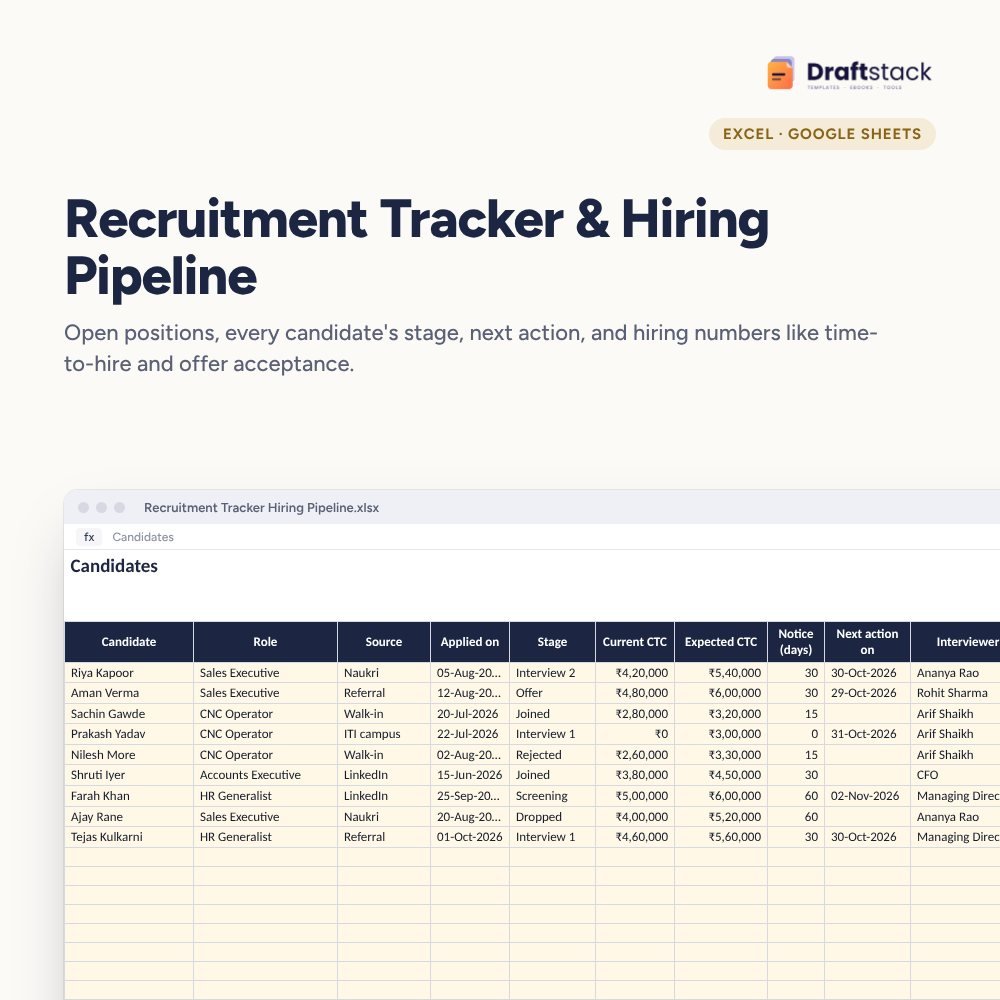 The template from this guideRecruitment Tracker & Hiring Pipeline (Excel)
₹349
 WhatsApp
Free Monthly Budget Sheet
A printable one-page budget sheet: income, fixed bills, daily spending and savings for the month. Print it or fill it on your phone.
More guides
How to Manage Supplier Payments and Payables Ageing
Read a payables ageing report, plan payments week by week, follow the MSME 45-day rule, and keep suppliers happy without running short of cash.
How to Make a Purchase Order (Format and Process)
What a purchase order must contain, PO numbering, GST on POs, the three-way match before payment, and a simple purchase process for small companies.
How to Plan a Project with a Gantt Chart
Break work into tasks, estimate durations, set owners and milestones, read a Gantt chart, and run a weekly review that catches delays early.