How to Manage Supplier Payments and Payables Ageing
Supplier payments are a balancing act: pay too late and you lose goodwill, discounts and sometimes tax deductions; pay too early and you squeeze your own cash. A simple weekly system solves most of it.
What payables ageing shows
List every unpaid supplier bill with its due date (invoice date + agreed credit days), then group the balance:
- Not due: still within terms
- 1 to 30 days overdue
- 31 to 60 days
- 61 to 90 days
- Over 90 days
Large amounts in the 60+ buckets mean either cash trouble or bills stuck in approval. Both need attention.
The MSME 45-day rule
If a supplier is registered as a micro or small enterprise (Udyam), payment must be made within the agreed period, and that period cannot exceed 45 days from acceptance of goods or services. Late payment can attract compound interest at three times the bank rate, and many companies can't claim the expense for tax until it's paid. Ask every supplier for their Udyam status and mark it in your records.
Plan payments week by week
Every Monday:
1. List what's overdue and what falls due this week and the next three.
2. Compare it with expected cash (collections, bank balance, limits).
3. Pay in this order: statutory dues, salaries, MSME suppliers near 45 days, critical suppliers, then others by due date.
4. Tell suppliers you can't pay on time before the due date, with a date you can commit to.
Stop bills getting stuck
Most late payments aren't about cash; the bill is waiting for approval or a goods receipt. Fix the process:
- Match PO, goods received and invoice as soon as the bill arrives
- Set an approval deadline (for example, three working days)
- Track bills from receipt, not only after approval
Use credit wisely
Paying on day 44 of 45-day terms, not day 10, keeps cash in your business without hurting anyone. Early payment makes sense when a supplier offers a discount that beats your cost of money: 2% for paying 30 days early is worth about 24% a year.
Reconcile every month
Ask key suppliers for a statement and match it with your records. Differences usually point to missing invoices, credit notes or duplicate entries.
Our Accounts Payable Ageing & Payment Planner works out due dates, ageing buckets and MSME alerts, and shows what to pay in each of the next four weeks.
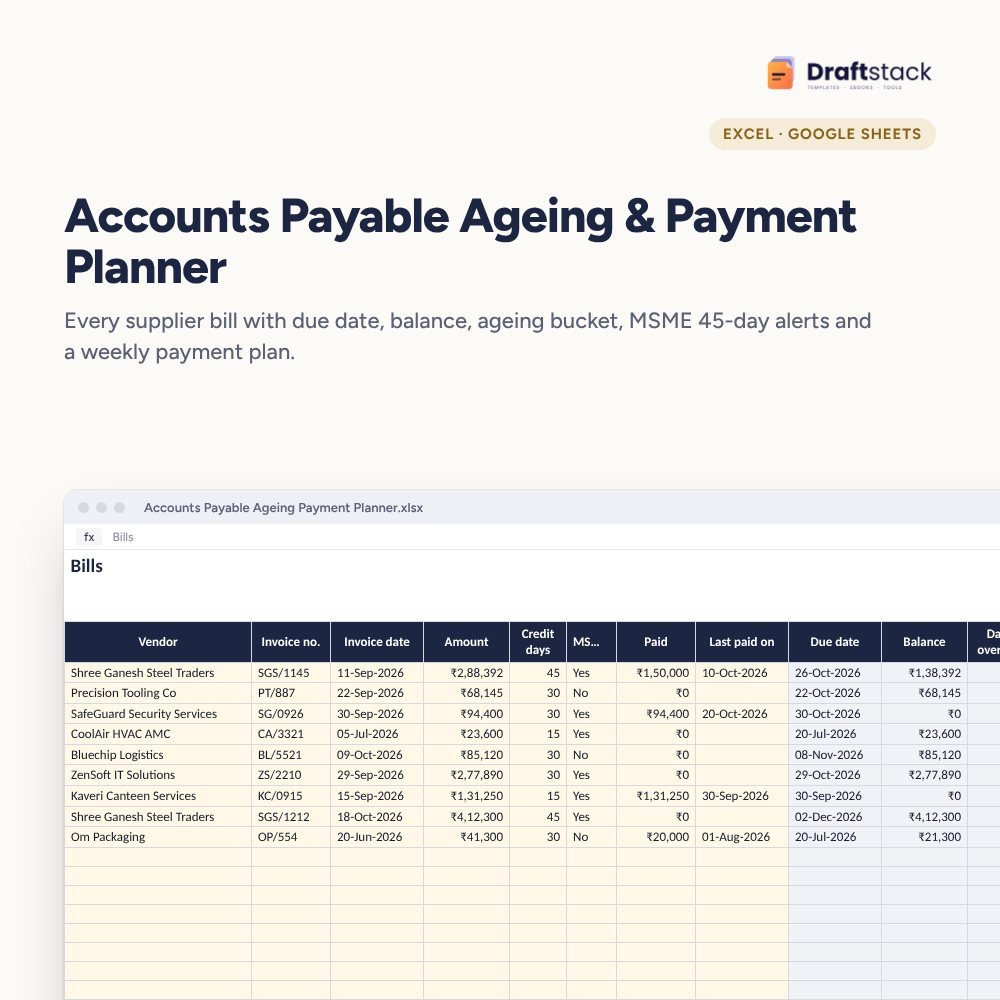 The template from this guideAccounts Payable Ageing & Payment Planner (Excel)
₹349
 WhatsApp
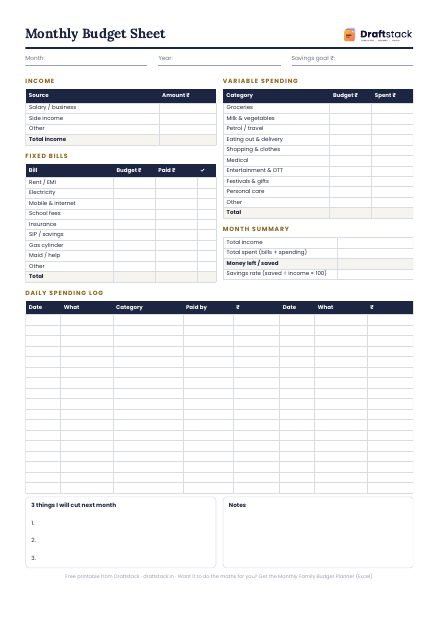
Free Monthly Budget Sheet
A printable one-page budget sheet: income, fixed bills, daily spending and savings for the month. Print it or fill it on your phone.
More guides
How to Track Candidates Without an ATS
Set up positions and stages, move candidates quickly, measure time to fill and offer acceptance, and choose sources that actually bring joiners.
How to Make a Purchase Order (Format and Process)
What a purchase order must contain, PO numbering, GST on POs, the three-way match before payment, and a simple purchase process for small companies.
How to Plan a Project with a Gantt Chart
Break work into tasks, estimate durations, set owners and milestones, read a Gantt chart, and run a weekly review that catches delays early.