What Is XIRR in Mutual Funds (and How to Calculate It in Excel)
If you invest through SIPs, the return your app shows first is often "absolute return": total gain divided by total invested. It's easy to read and usually wrong for judging how a SIP performed.
Why absolute return misleads
Say you started a ₹5,000 SIP three years ago. Your first instalment has been invested for 36 months; last month's has been invested for one. Absolute return treats them the same. A 25% absolute gain after three years of SIPs is a very different result from a 25% gain on a lumpsum held for three years.
What XIRR does
XIRR (extended internal rate of return) finds the single yearly rate at which all your investments, each made on its own date, would grow into today's value. It is the number to compare with an FD rate or another fund.
A worked example
- 10 Jan: invest ₹5,000
- 10 Feb: invest ₹5,000
- 10 Mar: invest ₹5,000
- Today (10 Oct): value ₹16,200
Gain is ₹1,200 on ₹15,000, which is 8% absolute. But the money was invested for only about 8 months on average, so the XIRR comes to roughly 12% a year.
How to calculate XIRR in Excel or Google Sheets
1. In one column, list dates: each investment date, and today's date at the end.
2. In the next column, list cash flows: investments as negative numbers, redemptions as positive, and today's portfolio value as a positive number at the end.
3. Use `=XIRR(cash_flows, dates)` and format the cell as a percentage.
Rules that trip people up:
- There must be at least one negative and one positive value.
- The first date in the list should be the earliest.
- Blank cells inside the ranges cause errors; use 0 instead.
What is a good XIRR?
It depends on the fund type and the period. Over 7 to 10 years, diversified equity funds have historically delivered low to mid teens in India, but past returns don't guarantee future ones. Over one or two years, XIRR swings a lot; judge equity funds over at least five years.
XIRR vs CAGR
CAGR works for a single lumpsum: one amount in, one value out. XIRR handles many cash flows on different dates, including SIPs, top-ups and partial redemptions. For a single lumpsum held the whole time, the two give the same answer. For SIPs, always use XIRR.
Track it for every fund
Calculating XIRR fund by fund gets tedious. Our Mutual Fund Portfolio Tracker with XIRR does it for up to 10 funds and your whole portfolio from one transactions list, with units, gains and a category split. It works in Excel and Google Sheets with no login.
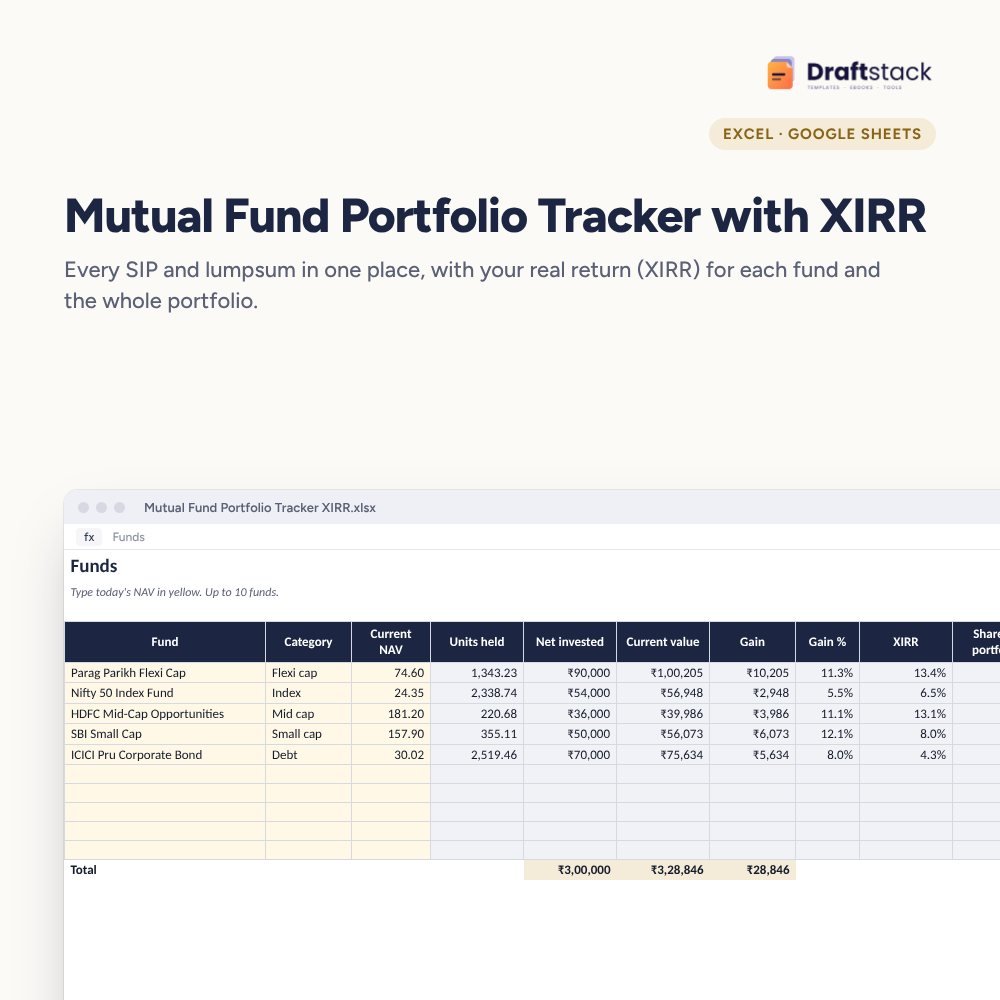 The template from this guideMutual Fund Portfolio Tracker with XIRR (Excel)
₹199
 WhatsApp
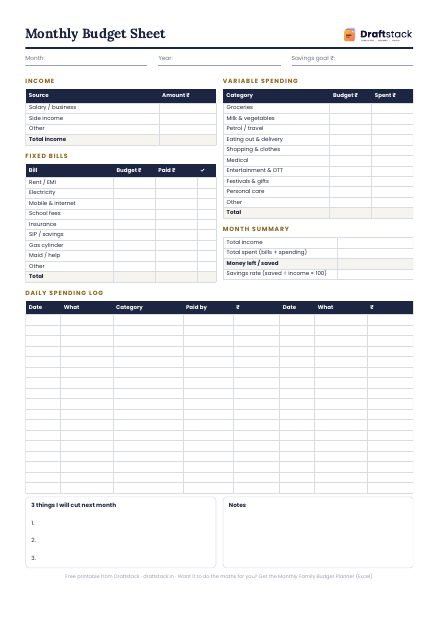
Free Monthly Budget Sheet
A printable one-page budget sheet: income, fixed bills, daily spending and savings for the month. Print it or fill it on your phone.
More guides
FD Maturity Amount and TDS on FD Interest, Explained
How banks work out FD and RD maturity values, when TDS is cut on interest, how Form 15G and 15H help, and a simple way to never miss a renewal.
How to Keep a Record of Your Family's Gold Jewellery
What to note for each piece, how to value 22K and 18K gold from today's rate, why HUID and bills matter, and how jewellery schemes really work.
How to Never Miss a Credit Card Due Date (and Avoid Interest)
Statement date vs due date, why minimum due is a trap, how credit use affects your score, and a simple monthly routine for two or more cards.