Rent vs Buy a House in India: How to Decide with Numbers
Buying a home is as much an emotional decision as a financial one, and that's fine. But it helps to know what the numbers say before you decide.
The real cost of buying
Most people compare rent with EMI. That leaves out a lot:
- Down payment: usually 20 to 25% of the price
- Stamp duty, registration and other costs: 6 to 8% of the price, paid upfront and never recovered
- Interest: on a 20-year loan, total interest can be close to the loan amount itself
- Maintenance, repairs and property tax every year
- Interiors and furniture for a new flat
The real cost of renting
- Monthly rent, rising 5 to 8% a year
- Shifting costs every few years
- No ownership at the end, unless you invested what you didn't spend on buying
Compare fairly
The fair question is: if you didn't buy, would you invest the down payment, the buying costs and the monthly difference between owning costs and rent? If you would, compare the house value minus loan left (owner's wealth) with the investments built by the renter.
A worked example
- Flat price ₹85 lakh, 20% down payment, 7% buying costs
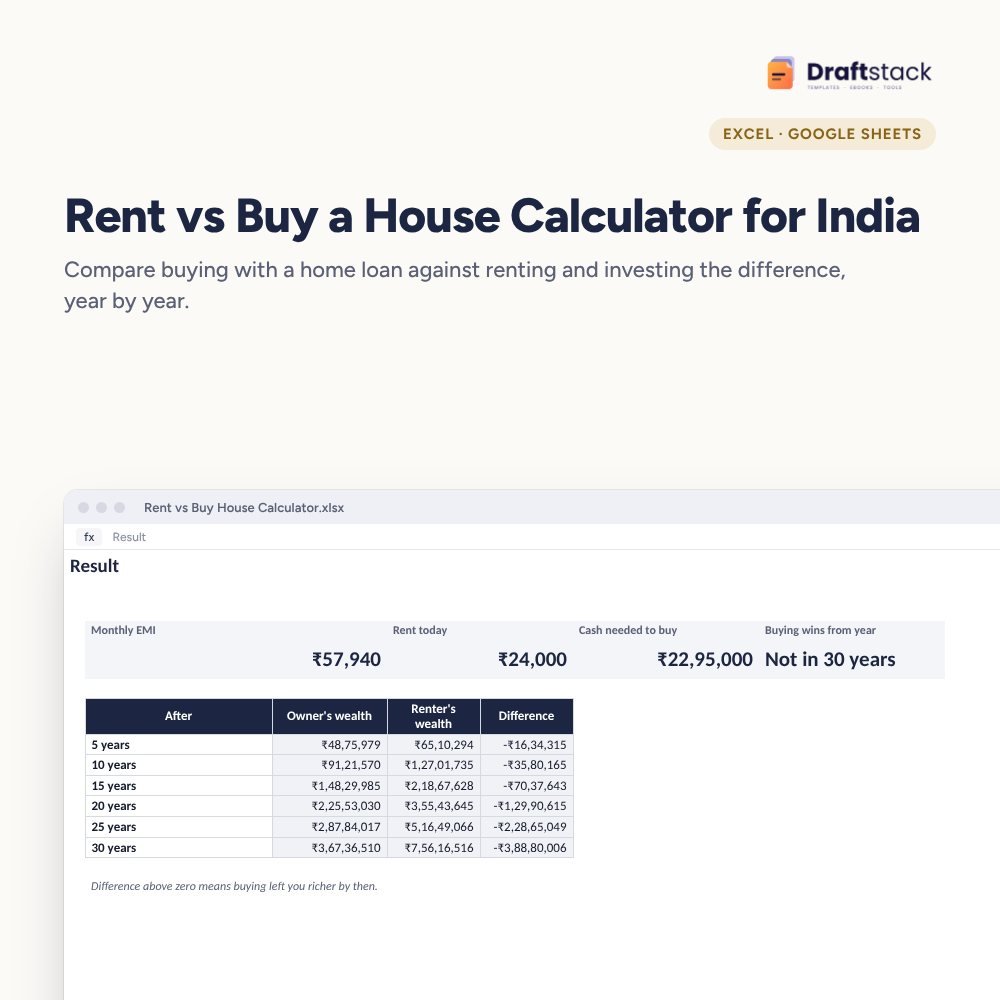
- Loan ₹68 lakh at 8.25% for 20 years: EMI about ₹57,900
- Rent for a similar flat: ₹24,000 a month, rising 6% a year
- Property value rises 5% a year; investments return 10% a year
Upfront, the buyer spends about ₹23 lakh in cash. The renter invests it instead, plus the gap between ₹57,900 and ₹24,000 each month. With these assumptions renting stays ahead for the whole 30 years, because the renter's investments compound faster than the house appreciates, as long as the renter really invests the difference every year. Raise property growth to 7% and lower the investment return to 8%, and the gap closes sharply. That's why it's worth testing a range rather than trusting one number, and why discipline matters as much as maths.
When buying makes more sense
1. You'll live in the home for 10+ years
2. Rent for a similar home is high compared with its price (rent above about 3% of price a year)
3. You wouldn't actually invest the difference if you rented
4. Stability matters a lot to your family (schools, elderly parents)
When renting makes more sense
1. Your job or city may change in the next few years
2. Prices in your area are very high compared with rents
3. Buying would leave you without an emergency fund
Before you sign
- Check RERA registration, title documents and the builder's track record
- Keep 6 months of EMI aside as a buffer
- Don't stretch the EMI beyond about 40% of take-home pay
Our Rent vs Buy a House Calculator does this year-by-year comparison with your own numbers and shows the break-even year. Try cautious assumptions before you decide.
 The template from this guideRent vs Buy a House Calculator for India (Excel)
₹199
 WhatsApp
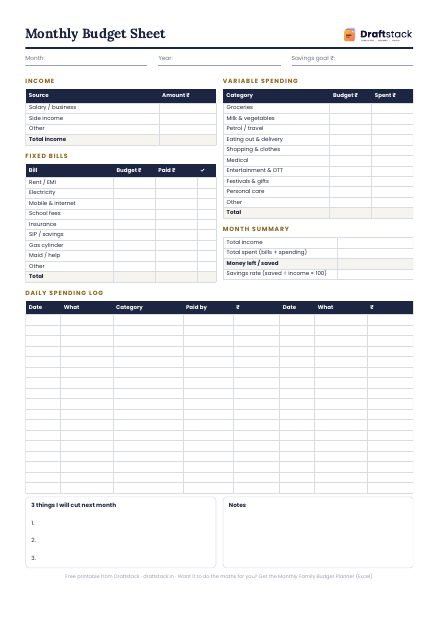
Free Monthly Budget Sheet
A printable one-page budget sheet: income, fixed bills, daily spending and savings for the month. Print it or fill it on your phone.
More guides
Car Loan or Cash: Which Is Better for You?
How to compare a car loan with paying cash, why the flat rate trick matters, a worked example, and the questions to ask the dealer.
Income Tax for Freelancers in India: TDS, 44ADA and Advance Tax
How freelancers are taxed, how presumptive taxation works, what TDS means for you, when to pay advance tax, and a worked example for FY 2026-27.
CTC to In-hand Salary: How to Calculate Your Take-home Pay
Every line between CTC and the amount in your bank: employer PF, gratuity, variable pay, employee PF, professional tax and income tax, with a worked FY 2026-27 example.