NPS Pension Calculation: How Much Will You Get at 60?
The National Pension System (NPS) builds a retirement corpus from your monthly contributions and market returns. At exit, part of the corpus comes to you as a lump sum and the rest buys an annuity that pays a monthly pension.
How the corpus builds up
Three things drive it:
1. How much goes in: your contribution, your employer's (if any), and how much both rise each year
2. For how long: years until exit, usually 60
3. Returns: depend on your mix of equity, corporate bonds and government securities
The split at exit
At exit, the corpus is divided into a lump sum you receive and an amount used to buy an annuity from an insurer. In late 2025, PFRDA relaxed the rules for non-government subscribers, allowing up to 80% as a lump sum, with at least 20% going to an annuity. Check the current rules for your category, and how any lump sum above 60% is taxed, before you exit.
From annuity to monthly pension
Monthly pension ≈ annuity amount × annuity rate ÷ 12. At a 6.5% annuity rate, every ₹10 lakh in the annuity pays about ₹5,400 a month for life.
A worked example
- Age 32, exit at 60 (28 years), current NPS balance ₹1.85 lakh
- You put in ₹5,000 a month and your employer ₹4,200; both rise 7% a year
- Expected return 9.5% a year
The corpus at 60 comes to roughly ₹3 crore. With 40% going to an annuity at 6.5%, the monthly pension is about ₹65,000, and the lump sum about ₹1.8 crore. At today's prices, after 6% inflation, that pension is worth about ₹13,000 a month. That gap is why starting early and raising contributions matter.
What changes the result the most
- Starting early: ten more years of compounding can double the corpus
- Raising contributions with your salary: a 5 to 10% yearly step-up adds a lot over 25 years
- Asset mix: a higher equity share has historically given higher long-term returns, with more ups and downs
- Employer contribution: if your company offers it, use it; it is also tax-efficient
Tax benefits in brief
Your own contributions can get an extra deduction of up to ₹50,000 under the old regime, over the usual limit. Employer contributions are deductible within limits in both regimes. Rules can change, so check for the current year.
Our NPS Contribution & Pension Estimator shows your corpus year by year, the lump sum and annuity split, the monthly pension in future and today's money, and a what-if table for different returns.
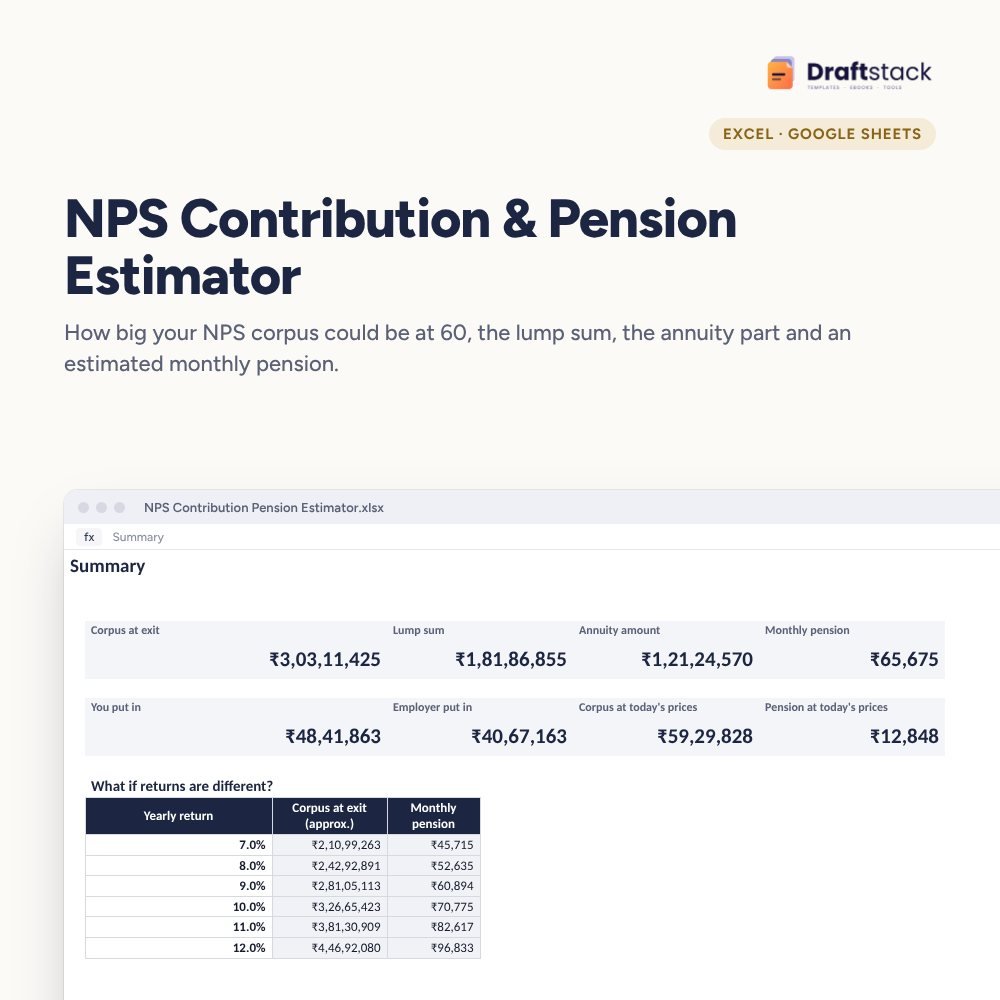 The template from this guideNPS Contribution & Pension Estimator (Excel)
₹129
 WhatsApp
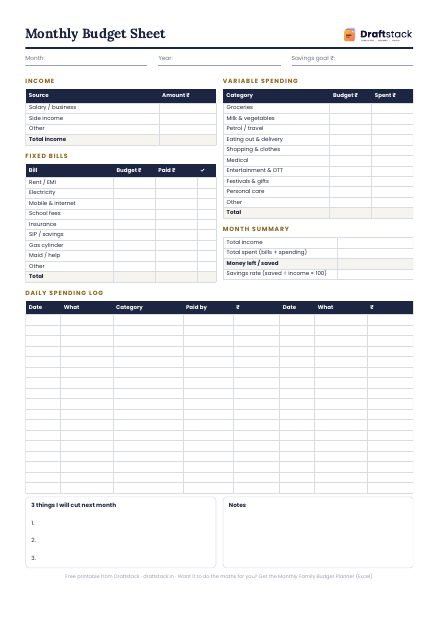
Free Monthly Budget Sheet
A printable one-page budget sheet: income, fixed bills, daily spending and savings for the month. Print it or fill it on your phone.
More guides
Sukanya Samriddhi Yojana: Rules, Returns and How Much You'll Get
Eligibility, deposit limits, the 8.2% rate, how interest is worked out, withdrawals at 18, maturity at 21, and worked examples for ₹1,000 a month and ₹1.5 lakh a year.
PPF Interest Calculation: The 5th of the Month Rule Explained
How PPF interest is really calculated, why depositing by 5 April matters, withdrawal and loan rules, extensions, and a year-by-year example.
What Is XIRR in Mutual Funds (and How to Calculate It in Excel)
Why absolute return misleads for SIPs, how XIRR works, a worked example, and how to calculate it yourself in Excel or Google Sheets.