How to Take Meeting Minutes That Get Things Done
Meeting minutes aren't a transcript. Their job is to record what was decided and who will do what by when. Everything else is optional.
What to record
1. Basics: date, meeting name, chair and attendees
2. Key points: two or three lines per topic, not a word-by-word record
3. Decisions: written clearly ("Approved: second shift from 1 November")
4. Actions: what, who and by when
Write actions that happen
A good action has three parts:
- A verb and a clear outcome: "Send revised quote to Shakti Auto"
- One owner: a person, not a department ("Ananya", not "Sales")
- A date: "by 14 October"
Bad: "Look into delivery issues." Good: "Call Vardhman Castings to confirm the revised delivery date and update the plan, Rohit, by 7 October."
Start every meeting with last time's actions
Before new topics, go through open actions: done, in progress, or stuck. This five-minute habit does more for accountability than anything else. People finish actions when they know they'll be asked.
Share within the same day
Send the minutes and action list within a few hours. If minutes arrive three days later, people have already forgotten, and the actions slip.
Keep a running action list
Instead of a separate document for each meeting, keep one list of all actions from all meetings, with the meeting ID. Then you can see everything a person has promised, across meetings.
When actions keep slipping
- Is the owner overloaded? Re-prioritise in the meeting.
- Is the action too big? Break it into a first step with a near date.
- Is it blocked by someone else? Make that the action.
- Is it no longer needed? Mark it Dropped and move on.
Short template
Meeting · Date · Chair · Attendees
Key points (bullets) · Decisions (bullets) · Actions (what, owner, date)
Who should take minutes?
Rotate the job among team members instead of always giving it to the most junior person. The minute-taker should be free to listen, so the chair runs the meeting and someone else writes. Read the action list aloud in the last two minutes so everyone agrees before leaving.
Our Meeting Minutes & Action Item Tracker keeps all meetings and actions in one place, flags overdue items and shows open actions by owner before your next meeting.
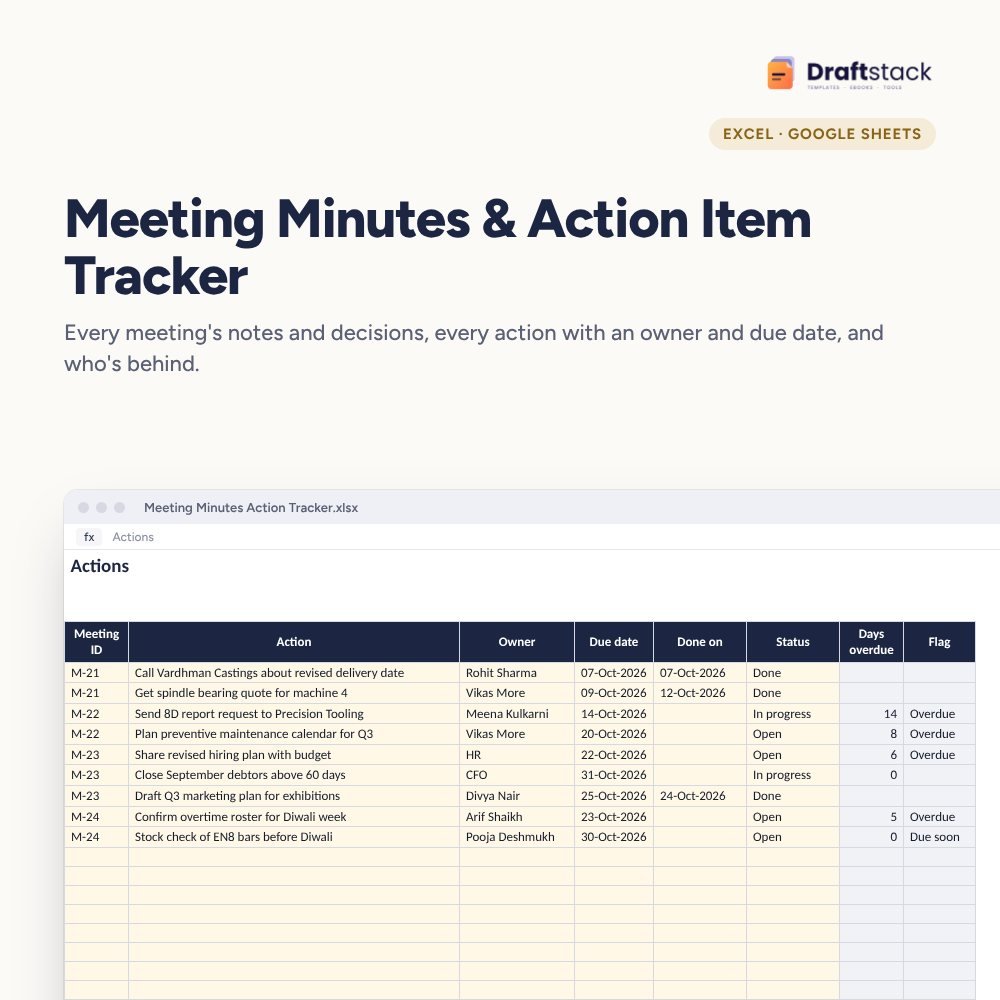 The template from this guideMeeting Minutes & Action Item Tracker (Excel)
₹299
 WhatsApp
Free Monthly Budget Sheet
A printable one-page budget sheet: income, fixed bills, daily spending and savings for the month. Print it or fill it on your phone.
More guides
How to Set Up an Employee Expense Claim Process
A simple expense policy, limits by category, bill rules, approvals, reimbursement timelines, GST invoices and common mistakes to avoid.
How to Calculate Working Capital (and Free Up Cash)
Working capital, debtor days, inventory days, creditor days and the cash conversion cycle explained with examples, plus practical ways to release cash.
Depreciation as per Companies Act and Income-tax: A Simple Guide
Useful life, residual value, SLM vs WDV, depreciation by days used, income-tax blocks and the 180-day rule, with worked examples.