How Much Emergency Fund Do I Need? (Indian Families)
An emergency fund is money you keep aside only for real emergencies: losing a job, a medical bill insurance doesn't cover, an urgent repair or travel for a family crisis. It keeps a bad month from becoming years of debt.
Step 1: Add up essential monthly costs
Use what you must pay even in a tough month:
- Rent or home loan EMI, other EMIs
- Ration, milk, vegetables, gas and electricity
- School fees (monthly share), insurance premiums (monthly share)
- Phone, internet, transport, regular medicines
Leave out what you could pause for a while: eating out, shopping, holidays. For a typical city family this comes to ₹50,000 to ₹70,000 a month.
Step 2: Pick the number of months
- Two stable salaries: 3 to 6 months
- One earner: 6 to 9 months
- Business owner or freelancer: 9 to 12 months
- Parents depend on you: add 2 to 3 months
Target = essential monthly costs × months. With ₹65,000 of essential costs and 6 months, that's ₹3.9 lakh.
Step 3: Keep it in the right place
The money must be safe and available within a day or two:
1. Savings account: instant, but low interest. Keep one month here.
2. Sweep-in FD: earns FD interest, breaks automatically when you need the money.
3. Liquid mutual fund: usually money within one working day; returns close to short-term FDs.
Avoid shares, equity funds or long lock-in products for this money; they may be down exactly when you need them.
Step 4: Build it month by month
Few people can set aside ₹3.9 lakh at once. Decide a monthly amount, set up an auto-transfer on salary day, and add bonuses or tax refunds. At ₹20,000 a month you reach ₹3.9 lakh in about 20 months.
Step 5: Use it, then refill it
If you dip into it, pause other investments and refill it first. Review the target once a year, because costs rise.
Insurance comes first
Health insurance for the whole family and term insurance for earning members protect against the biggest shocks. The emergency fund covers what they don't: deductibles, waiting periods and loss of income.
A quick example
Rent ₹22,000, groceries and milk ₹11,000, bills ₹4,400, school fees share ₹6,500, insurance share ₹3,500, EMIs ₹8,400, medicines and transport ₹5,500: essential costs come to about ₹61,300 a month. With one earner, nine months of cover is about ₹5.5 lakh. Start with three months, then build the rest while you invest for other goals.
Our Emergency Fund Calculator & Builder works out your target from your own costs, tracks every deposit and where it's kept, and shows the month you'll be ready.
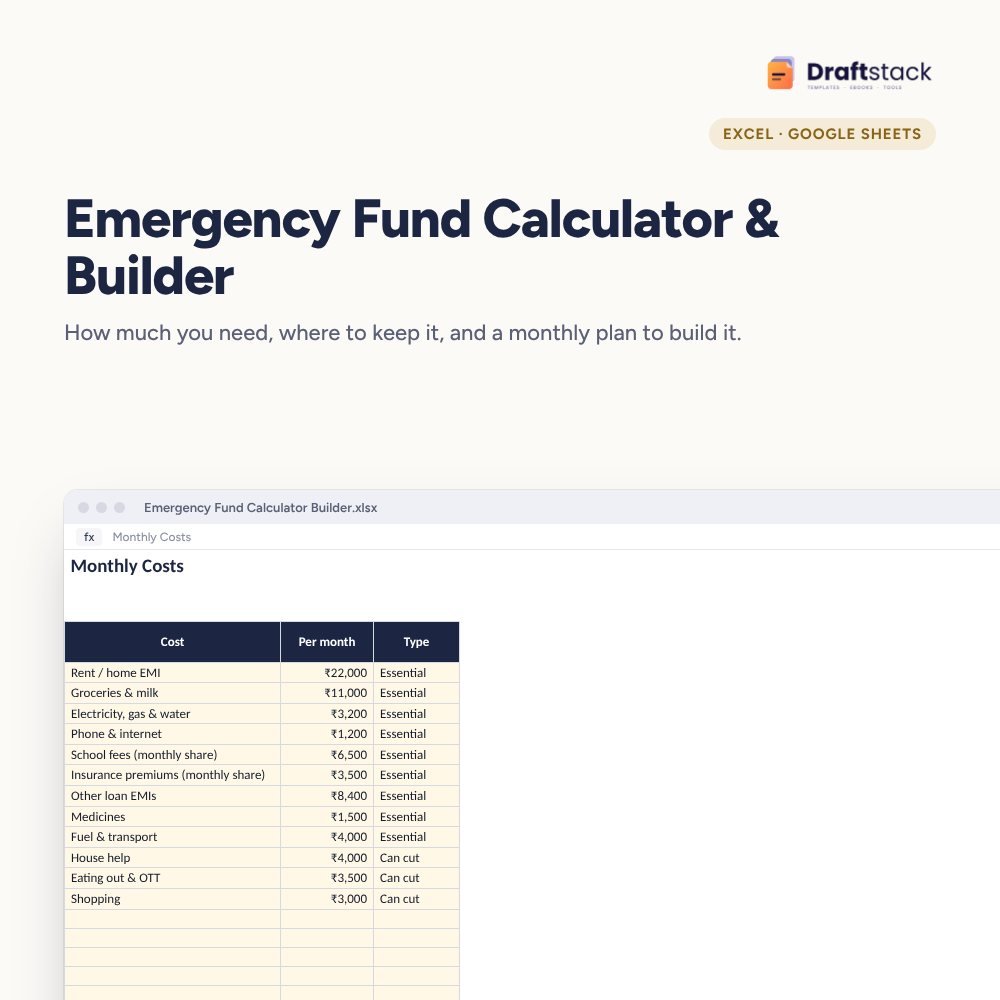 The template from this guideEmergency Fund Calculator & Builder (Excel)
₹99
 WhatsApp
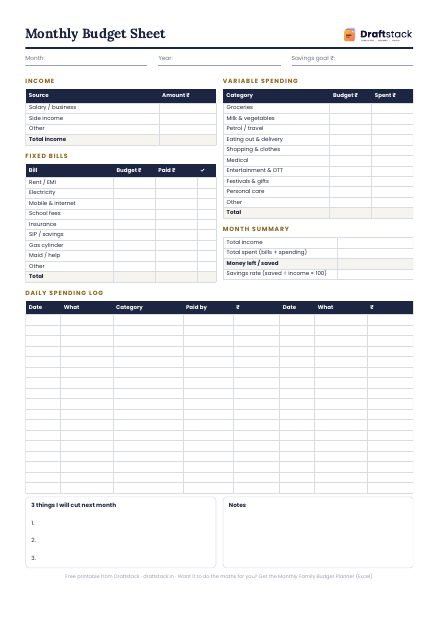
Free Monthly Budget Sheet
A printable one-page budget sheet: income, fixed bills, daily spending and savings for the month. Print it or fill it on your phone.
More guides
NPS Pension Calculation: How Much Will You Get at 60?
How the NPS corpus builds up, how the lump sum and annuity split works, a worked example, and what changes the final pension the most.
Sukanya Samriddhi Yojana: Rules, Returns and How Much You'll Get
Eligibility, deposit limits, the 8.2% rate, how interest is worked out, withdrawals at 18, maturity at 21, and worked examples for ₹1,000 a month and ₹1.5 lakh a year.
PPF Interest Calculation: The 5th of the Month Rule Explained
How PPF interest is really calculated, why depositing by 5 April matters, withdrawal and loan rules, extensions, and a year-by-year example.